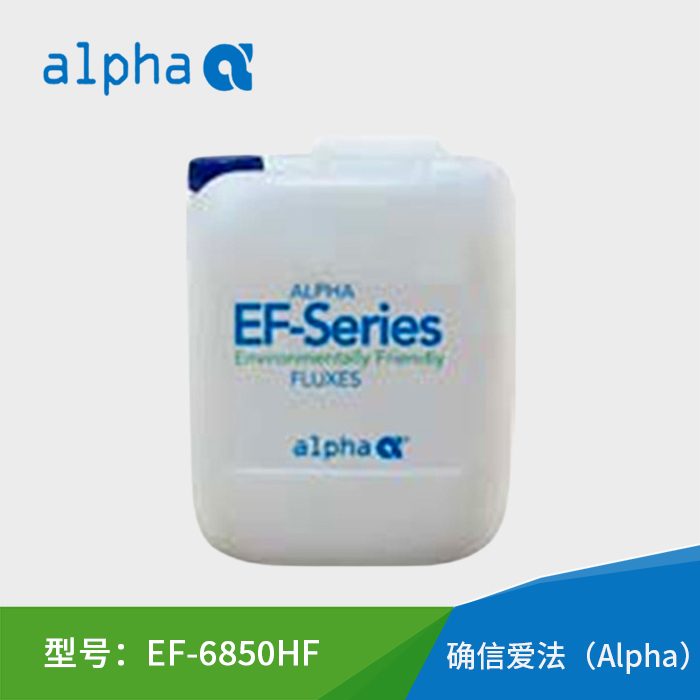
Product Information
Application Guidelines
Designed for standard and fine-pitch stencil printing at speeds between 25 mm/sec and 150 mm/sec. Recommended stencil thickness is 0.100 - 0.150 mm (4 - 6 mil), especially when used with ALPHA stencils. Squeegee pressure should be 0.21 - 0.36 kg/cm (1.25 - 2.0 lb/inch) depending on speed. Higher speeds require higher pressure. The reflow window ensures high yields and minimal rework.
Technical Specifications
| Category | Results | Procedure/Notes |
|---|---|---|
| Chemical Properties | ||
| Flux Classification | ROL0 | IPC J-STD-004B |
| Halide Content | Halide-Free ( I.C.), < 0.05% | IPC J-STD-004B |
| Fluoride Spot Test | Pass, No Fluoride present | JIS Z 3197:1999 8.1.4.2.4 |
| Halogen Content | Pass, Zero-Halogen - No intentionally added halogens | EN14582, Oxygen bomb combustion < 50 ppm |
| Silver Chromate Test | Pass, No Halide present | IPC J-STD-004B JIS Z 3197:1999 8.1.4.2.3 |
| Copper Mirror Test | Pass, Low Activity, No Breakthrough | IPC J-STD-004B JIS Z 3197:1999 8.4.2 |
| Copper Corrosion Test | Pass, Low Activity, No Corrosion | IPC J-STD-004B JIS Z 3197:1999 8.4.1 |
| Electrical Properties | ||
| Water Extract Resistivity | 11,500 ohm-cm | JIS Z 3197:1999 8.1.1 |
| SIR (7 days, 40 °C/90% RH, 12V Bias) | Pass, ≥10⁸ Ohms, 7 days, Spacing as small as 100 µm | IPC J-STD-004B, IPC TM-650 2.6.3.7 (Pass: ≥ 1 x 10⁸ ohm) |
| SIR (7 days, 85 °C/85%RH) | Pass, ≥10⁸ Ohms, 7 days, Spacing as small as 100 µm | IPC J-STD-004A, IPC TM-650 2.6.3.3 (Pass: ≥ 1 x 10⁸ ohm) |
| JIS Electromigration (1000 hrs, 85 °C/85%RH, 48V) | Pass | JIS Z 3197:1999 8.5.4 (Pass: ≥ 1 x 10⁹ ohm) |
| Bono Test (85 °C/85% RH, 50V Bias) | Pass | Bono Test |
| Physical Properties | ||
| Color | Residue Colorless, Transparent | |
| Tack Force Life | Pass Maintain >100 gf within 24 hrs (25 ± 2 °C, 50 ± 10% RH) | JIS Z 3284:1994, Annex 9 |
| Pass Change <10% when stored at 25 ± 2 °C, 50 ± 10% RH | IPC J-STD-005, IPC TM-650 2.4.44 | |
| Viscosity Stability (25 °C, 14 days) | Pass | Malcom Spiral Viscometer |
| Coalescence - Ultra Fine Features | 160 µm (SAC305, Type 5) | Internal Test Method |
| Solder Ball | Excellent | IPC J-STD-005, IPC TM-650 2.4.43 |
| Spread | >80% | JIS Z 3197:1999 |
| Wetting Time | Pass, 1.6 sec | Rhesca Test, Test Time T0 |
| Stencil Life | ~80 hours | @ 50% RH/25 °C (77 °F) |
| Cold Slump (25 °C / 50% RH) | Pass, No Bridge at 0.20 mm gap or above | IPC J-STD-005A |
| Pass, No Bridge at 0.20 mm gap or above | JIS Z 3284:1994 Annex 7 | |
| Hot Slump (150 °C / 10 min) | Pass, No Bridge at 0.25 mm gap or above | IPC J-STD-005A |
| Pass, No Bridge at 0.40 mm gap or above | JIS Z 3284:1994 Annex 8 | |
| Dryness Test (Talc) | Pass | JIS Z 3197:1999 8.5.1 |
Halogen Status
| Standard | Requirement | Method | Status |
|---|---|---|---|
| JEITA ET-7304 Definition of Halogen-Free Materials |
Br, Cl, F content below 1000 ppm in soldering materials (solid) | TM EN 14582 | Pass |
| IEC 612249-2-21 | Br or Cl below 900 ppm or total below 1500 ppm in residue | Pass | |
| JEDEC Low Halogen Electronics Definition |
Br or Cl below 1000 ppm in residue | Pass | |
| Zero Halogen: - No Halogenated compounds are intentionally added to the product. | |||
Process Guidelines
| Storage - Handling | Printing | Reflow (See Figure 1) | Cleaning |
|---|---|---|---|
|
1. Refrigerate at 0 – 10 °C (32 – 50 °F) to ensure stability. Shelf life is 6 months under these conditions. Refrigeration is recommended for best performance. 2. Solder paste can be stored for up to 2 weeks at temperatures not exceeding 25 °C (77 °F) before use. 3. After refrigeration, allow container to thaw to room temperature for up to 4 hours. Paste temperature should be > 19 °C (66 °F) before use. Verify with a thermometer. Printing can be done at up to 35 °C (95 °F) and 35 – 65% RH. 4. Manually stir before use. Rotary/centrifugal stirring is not required. If used, 300 RPM for 30 – 60 seconds is sufficient. 5. Do not mix used paste from the stencil with fresh paste in the container. This will change the rheological properties. |
Stencil: Recommended ALPHA CUT, NICKEL-CUT, TETRABOND™ or FORM stencils. Thickness 0.100 – 0.150 mm (4 – 6 mil). Pitch 0.4 – 0.5 mm (0.016” or 0.020”). Stencil design is influenced by process variables. Squeegee: Metal (recommended) Pressure: 0.21 – 0.36 kg/cm (1.25 – 2.0 lb/inch) in blade direction. Speed: 25 – 150 mm/s (1 – 6 inch/s) Paste Roll Diameter: 1.5 – 2.0 cm. Add paste when diameter reaches 1 cm (0.4”). Max size varies by blade type. Stencil Release Speed: 5 – 20 mm/s (0.20 – 0.79 inch/s). Lift Height: 8 – 14 mm (0.31 – 0.55”) |
Environment: Recommended clean dry air or nitrogen. Profile: Soak: 155 to 175 °C for 60 to 100 seconds yields best results. See Figure 1. High soak profiles (170-180 °C for 60-120s) also yield good results, especially in nitrogen. Typical peak temp 235 to 245 °C. Note 2: Maintaining peak temperature below 241 °C reduces BGA and QFN voiding. Note 3: Refer to supplier data for thermodynamic properties at elevated temperatures. If peak temp is reduced, TAL should be extended for optimal results. |
ALPHA OM-353 residues can remain on board after reflow. If cleaning is required, Vigon A201 (inline), A 250 (batch) or US (ultrasonic) is recommended. Vigon is a registered trademark of Zestron. For misprints or stencil cleaning, use ALPHA SM-110E or ALPHA SM-440. |
Recommended Reflow Profiles
Figure 1: ALPHA OM-353 SAC305/SACX Plus 0307
Typical Reflow Profile (High Soak)
Figure 2: ALPHA OM-353 SAC305/SACX Plus 0307
Typical Reflow Profile (Low Soak - Preferred)
Note 4: Laboratory test results show that the reflow and coalescence performance of these profiles are satisfactory. Users will still need to optimize each individual PCB application for best results. (Note: These diagrams are not strictly drawn to scale and are for illustrative purposes only.)
Technical Data Sheet Preview

Page 1

Page 2

Page 3

Page 4

Page 5

Page 6

Page 7
Safety & Warnings
Companies/operators are advised to read and review the Safety Data Sheet (SDS) before use for relevant health and safety warnings.