
Product Overview
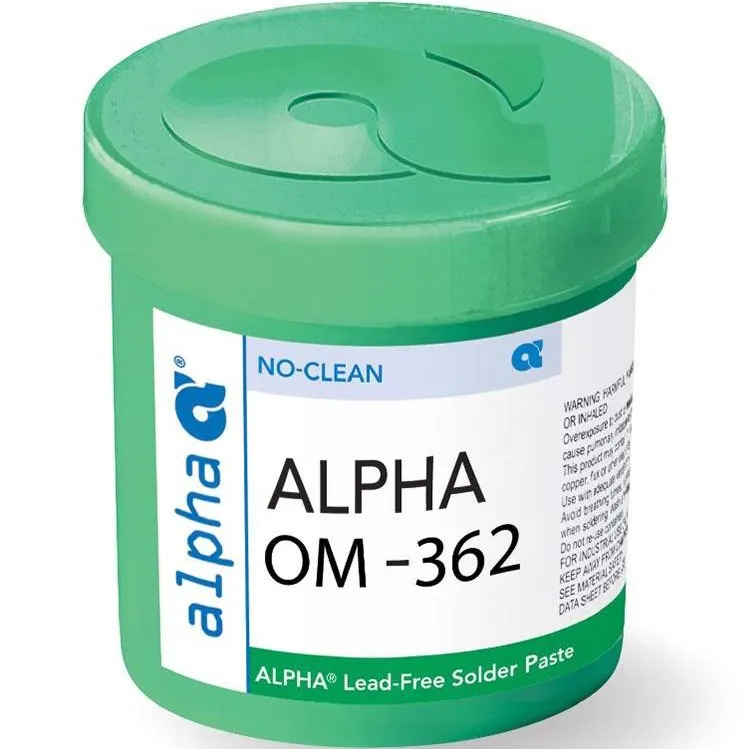
ALPHA OM-362 is a lead-free, halogen-free, no-clean solder paste specially formulated to provide ultra-low voiding performance across all component types, including bottom-terminated components. For BGA components, ALPHA OM-362 meets the IPC-7095 Class III voiding standard, and for bottom-terminated components, the voiding rate averages less than 10%.
It is designed for ultra-low voiding with high-reliability alloys like Innolot as well as traditional SAC alloys, ensuring electrical reliability and functionality for fine-pitch components.
Product Features

View Detailed Product Parameters
Halogen Status
ALPHA OM-362 is a zero-halogen product and meets the following standards:
| Halogen Standards | |||
|---|---|---|---|
| Standard | Requirement | Test Method | Status |
| BS EN 14582:2007 Characterization of waste - Halogen and sulfur content - Oxygen combustion in closed systems |
Br and Cl content < 1000 ppm in flux solids | Halogen CL, BR - DIN EN-14582 | Pass |
| RoHS | RoHS Directive EU/2015/863; amendment to 2011/65/EU. Limits ≤ 1000mg/kg | IEC 62321 :2013 & IEC 62321 :2008 | Pass |
Technical Data
| Category | Result | Procedures/Remarks |
|---|---|---|
| Chemical Properties | ||
| Flux Classification | ROL0 | IPC J-STD-004B |
| Fluoride Spot Test | No Fluoride Detected | IPC J-STD-004B |
| Copper Mirror Test | Low Activity, No Breakthrough | IPC J-STD-004B |
| Copper Corrosion Test | Low Activity, No Corrosion | IPC J-STD-004B |
| Electrical Properties | ||
| SIR (7 days, 85 掳C/85% RH) | Pass, 7 days ≥ 10鈦?Ohms, down to 200μm pitch | IPC J-STD-004C, IPC-TM-650 2.6.3.7 |
| SIR (7 days, 40 掳C/90% RH) | Pass, 7 days ≥ 10鈦?Ohms, down to 200μm pitch | IPC J-STD-004B, IPC-TM-650 2.6.3.7 |
| SIR (7 days, 40 掳C/93% RH) | Pass, 7 days ≥ 10鈦?Ohms | JIS Z 3197:1999 (8.5.3) |
| JIS Electrochemical Migration (1000h, 85 掳C/85% RH) | Pass, no visible corrosion or electromigration | JIS Z 3197:1999 (8.5.4) |
| Physical Properties | ||
| Residue Color | Soft, clean flux residue | - |
| Tack Force | Pass, 24 hours, 50% RH | IPC J-STD-005, IPC-TM-650 2.4.44 |
| Stencil Life @ Room Temp | 8 hours consistent transfer efficiency | @25 掳C/50% RH |
| Stencil Life @ High Temp | 8 hours consistent transfer efficiency | @30 掳C/65% RH |
| Cold Slump (25 掳C / 50% RH) | Pass, no bridging at 0.20 mm pitch | IPC J-STD-005A |
| Hot Slump (150 掳C / 10 mins) | Pass, no bridging at 0.25 mm pitch | IPC J-STD-005A |
| Solder Ball | Preferred | IPC J-STD-005 TM-650 2.4.43 |
| Spread | ~80% | JIS Z 3197:1999 8.3.1.1 |
| Dryness Test (Talc) | Pass | JIS Z 3197:1999 8.5.1 |
Process Guidelines
The following process settings are provided as a process window guideline based on typical SMT assembly. Because assembly processes vary, optimal process settings should be evaluated for each process.
Stencil: 0.10 mm (4.0 mil) thickness, tested internally during product development. Contact MacDermid Alpha technical support for recommendations.
Aperture Design: ALPHA OM-362 can be printed with various aperture designs. Optimal print aperture: AR ≥ 0.59.
Squeegee: Recommended metal squeegee angle is 60° or 45°.
Speed: Suitable for stencil printing with speeds between 25 mm/s (1.0 in/s) and 150 mm/s (6.0 in/s).
Pressure: Depending on print speed and stencil/substrate quality, typical squeegee pressure for a 30 cm (12 in) blade ranges from 0.18 kg/cm (1.0 lbs/in) to 0.29 kg/cm (1.6 lbs/in).
Paste Roll: For optimal performance, add paste when the roll reaches 1.0 cm (0.40 in) diameter minimum. Recommended roll diameter is between 1.5 cm (0.60 in) and 2.0 cm (0.80 in).
Stencil Release Speed: Preferred >5.0 mm/s.
ALPHA OM-362 leaves soldering residues on the board after reflow. IPA solutions can be used for print errors and stencil cleaning operations.
Storage and Handling: Refrigerate at 0-10 °C (32-50 °F) for stability. ALPHA OM-362 has a shelf life of 4 months under these conditions. After refrigeration, thaw to room temperature for up to 4 hours. The paste must reach 19 °C (66 °F) or above before use.
Do not mix used paste from the stencil with unused paste in the jar. This will affect the rheology of the unused paste.
Reflow Profile
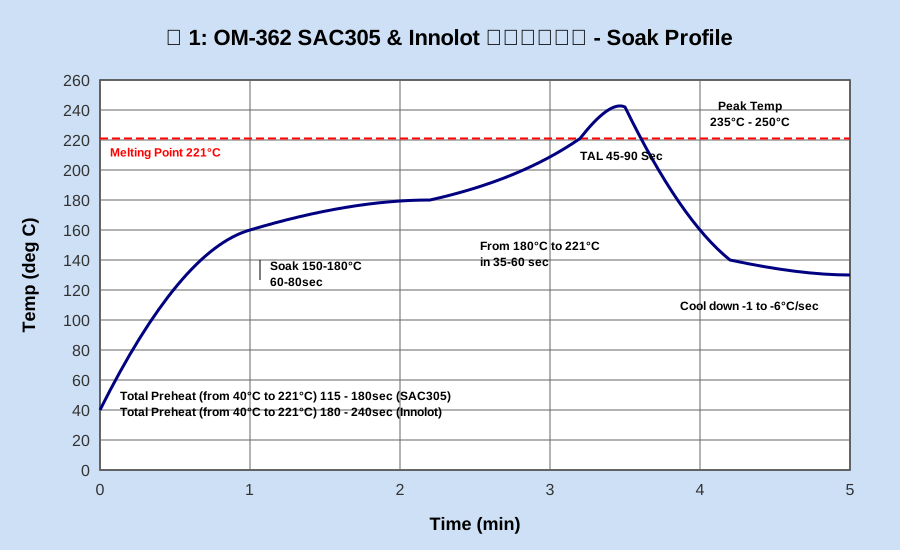
Figure 1: OM-362 SAC305 & Innolot Recommended Soak Profile
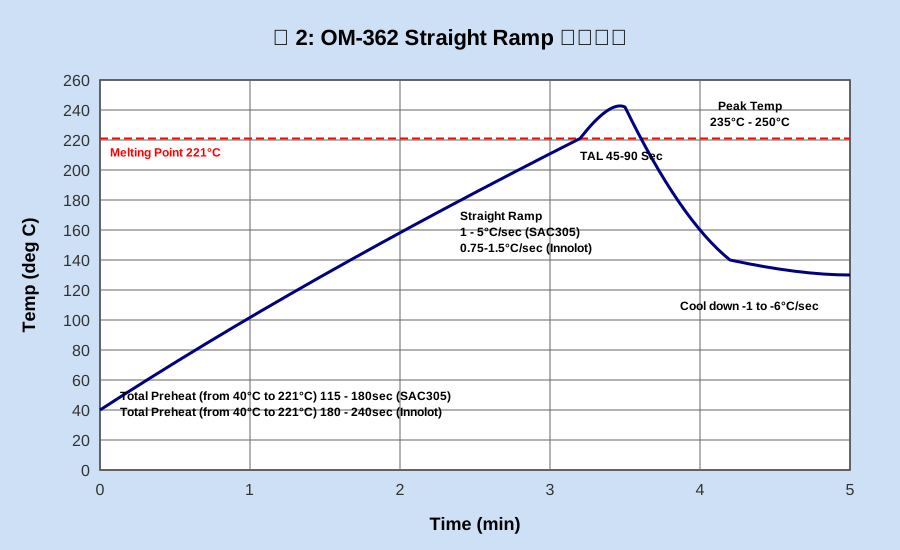
Figure 2: OM-362 Straight Ramp Recommended Profile
Note: Innolot can be reflowed using similar profiles to SAC305. Field feedback confirms that extended profiles can further reduce voiding rates for Innolot alloys. Note that this is a recommendation only. Adjustments to the reflow profile may be necessary based on equipment and assembly factors.
Safety & Warnings
It is recommended that companies and operators read and review the Safety Data Sheet (SDS) before use to obtain relevant health and safety warnings.