
Product Overview
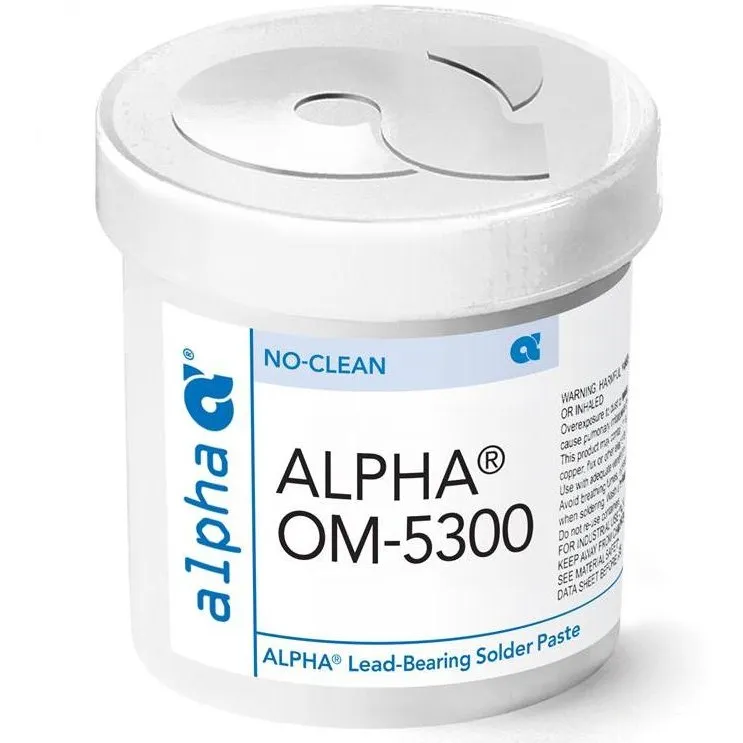
ALPHA OM-5300 is a no-clean solder paste designed to satisfy the need for tin-lead soldering when lead-free components are present in circuit board assemblies. Like all ALPHA solder pastes, it features excellent paste print repeatability, reducing variation in the printing process to a minimum.
What makes ALPHA OM-5300 unique is its ability to withstand long soak profiles while providing excellent wetting of the tin-lead alloy onto lead-free surfaces. Its extremely low BGA voiding and high post-reflow Surface Insulation Resistance (SIR) make it the ideal choice for tin-lead soldering with lead-free components.
Product Features

View Detailed Product Specifications
Application Guide
Technical Data
| Category | Result | Procedure/Remarks |
|---|---|---|
| Chemical Properties | ||
| Activity | ROL0=J-STD Category Corrosivity - Pass copper mirror test (L) | IPC J-STD-004 |
| Halide Content | Halogen-Free (titration) Pass silver chromate test | IPC J-STD-004 |
| Electrical Properties | ||
| SIR (IPC 7 days@ 85°C/85%RH) | 7.7 x 10⁸ ohms | Pass, IPC J-STD-004 {Pass = 1 x 1⁸ ohm min, uncleaned} |
| SIR (Bellcore 96 hours @35 °C/85%RH) | 1.3 x 10¹¹ ohms | Pass, Bellcore GR78-CORE {Pass = 1 x 10¹¹ ohm min} |
| Physical Properties (using 90% metal content, Type 3 powder) | ||
| Flux Residue Appearance | Clear, transparent flux residues | 63Sn/37Pb alloy |
| Tack and Humidity (6 hours) | Less than 1g/mm² (relative humidity changes: 25%, 50% and 75%) | IPC J-STD-005 |
| Viscosity | 90-3-M17, 90% metal loading M17 formulation suitable for all typical stencil printing applications. Target viscosity maintained at 10 RPM Malcom | Malcom Spiral Viscometer; J-STD-005 |
| Solder Balls | Pass < 10 (63Sn/37Pb alloy) | Pass IPC J-STD-005 |
| Stencil Life | > 8 hours | @50%RH, 74°F (23°C) |
| Collapse | Pass Cold/Hot Collapse Test Pass | IPC J-STD-005 DIN Standard 32 513, 5.3 |
Process Guide*1
| Storage-Handling | Printing | Reflow (see Figure 1 & 2) |
|---|---|---|
|
Stencils: ALPHA CUT or ALPHA FORM stencils recommended, thickness 0.1 mm (4 mil) to 0.15 mm (6 mil). Squeegee: Metal Roll Diameter: Diameter 1.5-2.0 cm, add paste when diameter reaches 1 cm. Maximum roll diameter determined by squeegee. Pressure: 0.15-0.3 kg/cm (0.8-1.5 pounds/inch) per inch of squeegee length Speed: 1-6 inches per second (25-150 mm) Release Speed: 3-10 mm per second. Determined under microscope. Incorrect settings can cause tailing or paste starvation at small aperture sizes. Direct Print Head: ALPHA OM-5300 is compatible with MPM RheoPump™ and DEK ProFlow™ systems. |
Gas: Clean, dry air or nitrogen atmosphere. Reflow Window (63/37):
Peak Temperature: 200 to 235 °C. Higher values at peak temperature may cause BGA ball formation. |
Reflow Profiles
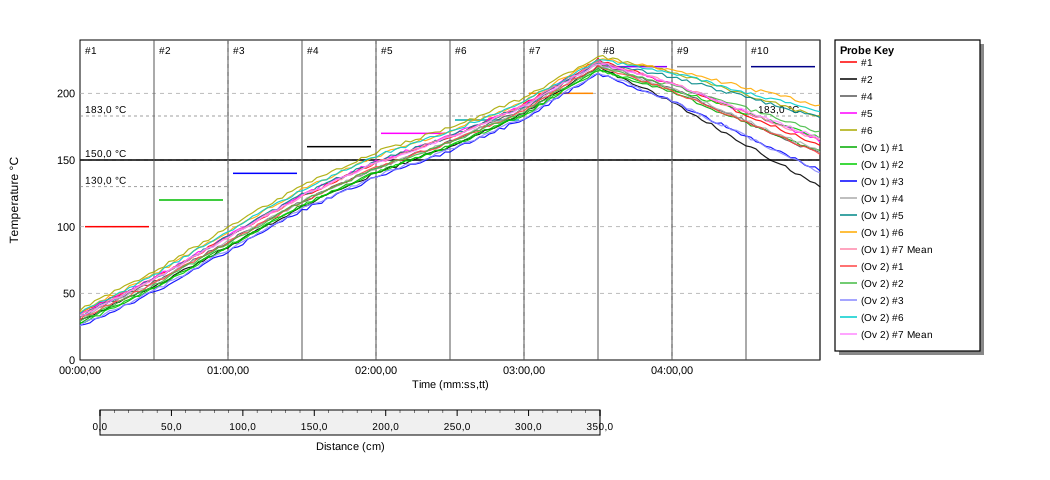
Figure 1 & Figure 2: Typical tin-lead alloy reflow profiles
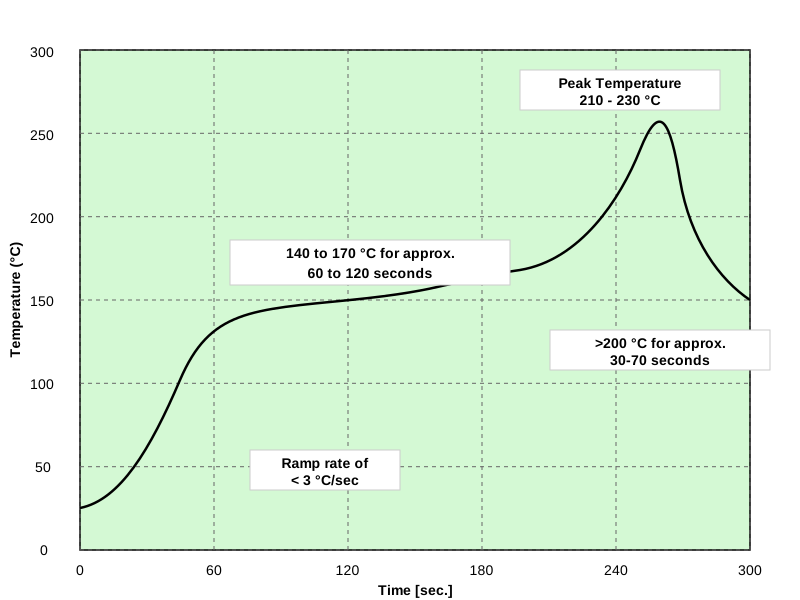
OM-5300 Recommended Reflow Profile (Typical tin-lead alloy)
Storage
ALPHA OM-5300 should be stored in a refrigerator at 35-45 °F (1-10 °C). Before opening and using, ensure the paste reaches room temperature to prevent moisture condensation on the paste. See the technical data sheet for other storage requirements.
Safety & Warnings
It is recommended that companies/operating personnel read and review the Safety Data Sheet (SDS) before use to obtain relevant health and safety warnings.