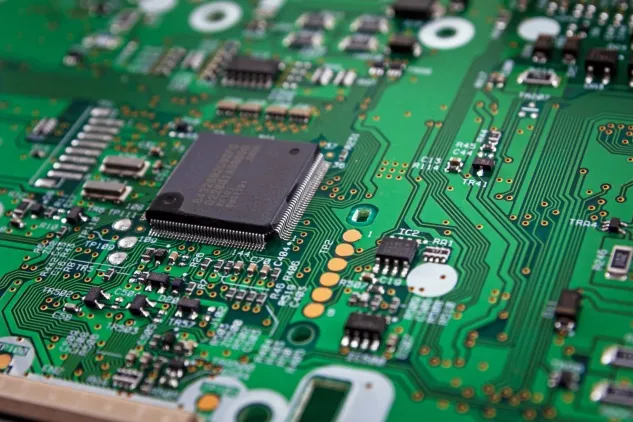
Low-Temp High-Reliability No-Clean Zero-Halogen Excellent Drop Shock Resistance

ALPHA® OM-565 HRL3
Low-Temperature Solder Paste

A next-generation low-temperature no-clean solder paste designed for temperature-sensitive packages, reducing warpage-induced defects and offering outstanding drop-shock and thermomechanical reliability.

Product Overview

ALPHA® OM-565 HRL3 is a high-reliability, zero-halogen, low-temperature solder paste specifically engineered to mitigate warpage-induced defects—such as hot tearing—in temperature-sensitive chip-scale packages and large, thin form-factor assemblies. It operates at a target peak reflow temperature of 175 °C, lowering energy consumption and cost while reducing thermal stress on components.

This solder paste provides superior wettability to minimize post-reflow defects, including Non-Wet-Open (NWO) and Head-in-Pillow (HiP). Compared to traditional low-temperature solutions, the HRL3 alloy delivers enhanced thermomechanical and drop-shock performance, with reliability comparable to SAC305 for operating temperatures below 100 °C.

With its excellent processability and electrochemical reliability, ALPHA OM-565 is the ideal choice for fine-feature printing and high-density boards, ensuring premium manufacturing quality without compromising on cost efficiency.
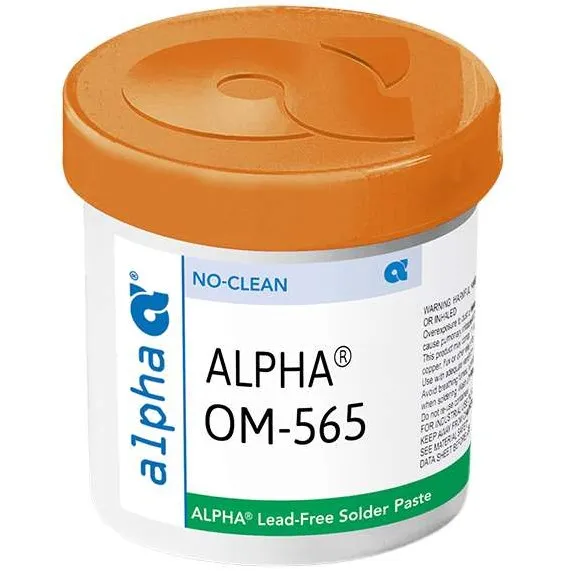
ALPHA® OM-565 HRL3 Solder Paste Product Image

Product Features

ALPHA® OM-565 HRL3 Solder Paste Features

Compatibility with HRL3 Alloy: Compatibility with HRL3 alloy for enhanced thermomechanical and drop shock reliability.

Enables Peak Reflow Temperature of 175°C: Reduces energy consumption in reflow ovens and minimizes thermal stress on temperature-sensitive components.

Low Melt Point Reflow: Enables the use of temperature-sensitive components and substrates, providing a wider process window.

Superior HiP/NWO Performance: Formulated to minimize common warpage-induced assembly defects such as Head-in-Pillow (HiP) and Non-Wet-Open (NWO).

Compatibility with Contact Rework Applications: Compatible with contact rework processes using ALPHA rework fluxes and cored wires.

8-Hour Stencil Life: Stable print process window over long shift durations in both ambient and elevated conditions (up to 32°C/70%RH).

Minimizes Warpage Induced Defects
to Maximize Assembly Yield

Next-generation devices require larger footprints and thinner form-factor designs that deliver superior processing power over existing technologies. These next-generation packages present challenges for assembly at traditional Surface Mount Technology (SMT) reflow temperatures.

ALPHA® OM-565 HRL3 enables a reduction in peak reflow temperature to 175°C, mitigating common warpage induced defects, such as HiP and NWO, and improving assembly yields.

Chart 1: Target Peak Reflow Temperature Requirement for Alloys

0 50 100 150 200 250 300 Temperature (°C) SAC305 @ 245°C HRL1 @ 190°C HRL3 @ 175°C SAC305 245°C HRL1 190°C HRL3 175°C HRL3 @ 175°C

Enhances the Environmental Sustainability
of the Assembly Process

The HRL3 alloy offers a significant reduction in peak reflow temperature compared to existing Tin-Silver-Copper (SAC) reflow conditions.

The ability to reliably solder at peak temperatures of 175°C increases the efficiency of existing assembly processes while reducing production energy consumption by up to 20-25%, lowering the manufacturer's net impact on the surrounding environment.

ALPHA® OM-565 Environmental Sustainability
Environmentally Sustainable Assembly Process
View Detailed Product Parameters

Product Information

Alloy: HRL3
Powder Size: Type 4, Type 5
Packaging: 500g Jars, 6" & 12" Cartridges
Lead-Free: Complies with RoHS Directive EU/2015/863; Annex II of 2011/65/EU

Halogen Levels

Standard Requirement Test Method Status
BS EN 14582:2016 Zero-Halogen (No intentionally added halogens) SGS Halogen Cl, Br - BS EN14582 (2016) / Combustion Not Detected
RoHS RoHS Directive EU/2015/863; Annex II of 2011/65/EU IEC 62321:2013 & IEC 62321:2008 Pass
REACH Tested SVHC concentration <= 0.1% (w/w) SGS Internal Test Method Pass

Technical Specifications

ALPHA OM-565 HRL3
Category Results Procedure/Remarks
Chemical Properties
Flux Classification ROL0 IPC J-STD-004B
Copper Mirror Test Low activity, no breakthrough IPC J-STD-004B
Copper Corrosion Test Low activity, no corrosion IPC J-STD-004B/JIS Z 3197
Electrical Properties
JIS Surface Insulation Resistance
(7 Days, 40 °C/93% RH)
Pass, ≥10⁸ Ω (7 Days) JIS Z 3197:1999 (8.5.3)
IPC Surface Insulation Resistance
(7 Days, 85 °C/85% RH, 12V)
Pass, ≥10⁸ Ω (7 Days) IPC J-STD-004C, TM-650 2.6.3.7
IPC Surface Insulation Resistance
(7 Days, 40 °C/90% RH)
Pass, ≥10⁸ Ω (7 Days), pitch down to 100μm IPC J-STD-004B, IPC-TM-650 2.6.3.7
Bellcore Surface Insulation Resistance
(5 Days, 65 °C/85% RH)
Pass, ≥10¹¹ Ω (5 Days) Bellcore GR-78 Core Issue 1, Sep 1997 (Section 13)
IPC Electromigration Pass, no corrosion, discoloration or electromigration, 596 hours IPC J-STD-004B, IPC-TM-650 2.6.14.1
Physical Properties
Residue Color Soft, transparent flux residue -
Tack Force vs. Time/Humidity Pass, 24 hours at 25%, 50%, and 75% RH JIS Z 3284:1994, Annex 9
Tack Force vs. Time/Humidity Pass, 24 hours at 25%, 50%, and 75% RH IPC J-STD-005, IPC-TM-650 2.4.44
Random Solder Balling Good IPC J-STD-005, IPC-TM-650 2.4.43
Stencil Life under Ambient Conditions Stable transfer efficiency over 8 hours @25 °C/50% RH
Stencil Life under Elevated Conditions Stable transfer efficiency over 8 hours @32 °C/70% RH
Cold Slump (25 °C/50% RH) Pass, no bridging above 0.20mm IPC J-STD-005A
Hot Slump (128 °C/10 mins) Pass, no bridging above 0.25mm IPC J-STD-005A
Dryness Test (Talcum) Pass, residue non-sticky after reflow JIS Z 3197

Application Guidelines

The following process parameters serve as a general guide for a typical SMT process window. Due to variations in assembly processes within the electronics manufacturing industry, the optimal settings for each process should be evaluated individually.

ALPHA OM-565 HRL3 is a Bi-containing alloy solder paste and must be used only with lead-free assemblies.

For mixed BGA solder joints, a solder paste volume to sphere volume ratio of 0.60-0.90 is recommended to improve reliability.

Stencil: A thickness of 0.10 mm (4.0 mil) was internally tested during product development. Stencil design is influenced by many process variables. Please contact your local MacDermid Alpha technical support department for recommendations.

Aperture Design: ALPHA OM-565 HRL3 can be printed using various aperture designs. Optimal printing results are obtained with an Area Ratio (AR) ≥ 0.59.

Squeegee: Metal squeegees are recommended, at angles of 60° or 45°.

Speed: Suitable for stencil printing at speeds between 25 mm/s and 150 mm/s (1-6 in/s).

Pressure: Depending on print speed and stencil/substrate, typical squeegee pressure for a 30 cm (12 in) squeegee length is 0.18-0.29 kg/cm (1.0-1.6 lbs/in). Applications requiring higher printing speeds will need higher blade pressures to ensure a clean stencil surface.

Solder Paste Roll Diameter: A diameter between 1.5 cm (0.60 in) and 2.0 cm (0.80 in) is recommended for optimal performance. Add fresh solder paste when the roll diameter reaches 1.0 cm (0.40 in) or less. The maximum roll size varies by squeegee.

Stencil Release Speed: Recommended separation speed is >5.0 mm/s.

ALPHA OM-565 residue can be left on the board after reflow. IPA can be used for misprints or stencil cleaning. Suitable stencil cleaners can also be used for underside stencil wiping or off-line stencil cleaning.

Storage and Handling:

Refrigerate at 0-10 °C (32-50 °F) to ensure stability. Under these storage conditions, ALPHA OM-565 HRL3 has a shelf life of 6 months. After refrigeration, allow the solder paste container to warm up to room temperature for up to 4 hours. Prior to use, the solder paste temperature must reach 19 °C (66 °F). It is recommended to verify the solder paste temperature with a thermometer before loading it onto the printer to ensure it is above 19 °C (66 °F).

Note: Do not mix used solder paste removed from the stencil with unused solder paste in the jar, as this will alter the rheological properties of the unused paste.

Reflow Profile

Note: The following are recommendations only. The reflow profile may need to be adjusted based on equipment and assembly factors. MacDermid Alpha recommends using a soak reflow profile with a target peak temperature of 175°C.

ALPHA OM-565 HRL3 solder paste must be used only with lead-free components.

Reflow Environment: Capable of reflow in both Air and Nitrogen atmospheres.

ALPHA OM-565 HRL3 Typical Soak Reflow Profile Recommendations

200 180 160 140 120 100 80 60 40 20 0 Temperature (°C) 0 1 2 3 4 5 6 7 Time (min) Melting Point: 146°C 40-100°C Ramp Rate: 1-3 °C/sec Soak: 100-120°C 100 ±15 sec Time Above Liquidus 146°C: 100 - 120 sec Peak Temp: 175°C ± 10°C Cooling Rate: 1-4°C/sec

Safety & Warnings

It is recommended that your company and production line operators read and review the health and safety warnings in the Product Safety Data Sheet (SDS) before using this product. The relevant SDS is available upon request.